


How vision and no-code software are changing what’s possible for high-mix manufacturers.
This content was presented during a recent webinar hosted by Rigorous Technology, “The Future of High-Mix Automation”
Rigorous Technology co-founders Colin Riggs and Diane Abruzzini explored how advances in physical AI and modular software are making automation more practical for high-mix environments.
This article covers the key insights, including two system demos in dispensing and palletizing, showing how modern automation can handle real-world variability without constant human intervention.
The Challenge of High-Mix Manufacturing
In a high-mix operation, line speeds vary, products change daily, and setups are constantly in flux. The problem is that traditional automation wasn’t designed for this reality.
Traditional automation was built for repetition at scale: the same part, the same motion, thousands of times a day. That model worked for high-volume assembly lines, like the automotive industry, but it was never a natural fit for manufacturers who need flexibility. Legacy systems demand a large footprint, a fixed location, weeks of integration work, and dedicated staff just to keep them running. For most plants, that kind of commitment isn’t just expensive. It’s an operational disruption.
So automation gets pushed to the back burner. Not because it isn’t valuable, but because the version most manufacturers have been sold doesn’t match how their floors actually operate.
That’s changing. Advances in machine vision and software have made modern robotics far more adaptable. Today’s systems can be deployed faster, repositioned as needs shift, and programmed without specialized engineering teams. The barrier isn’t automation itself. It’s having access to the right kind of automation for a high-mix environment.
The Solution: Modern Software
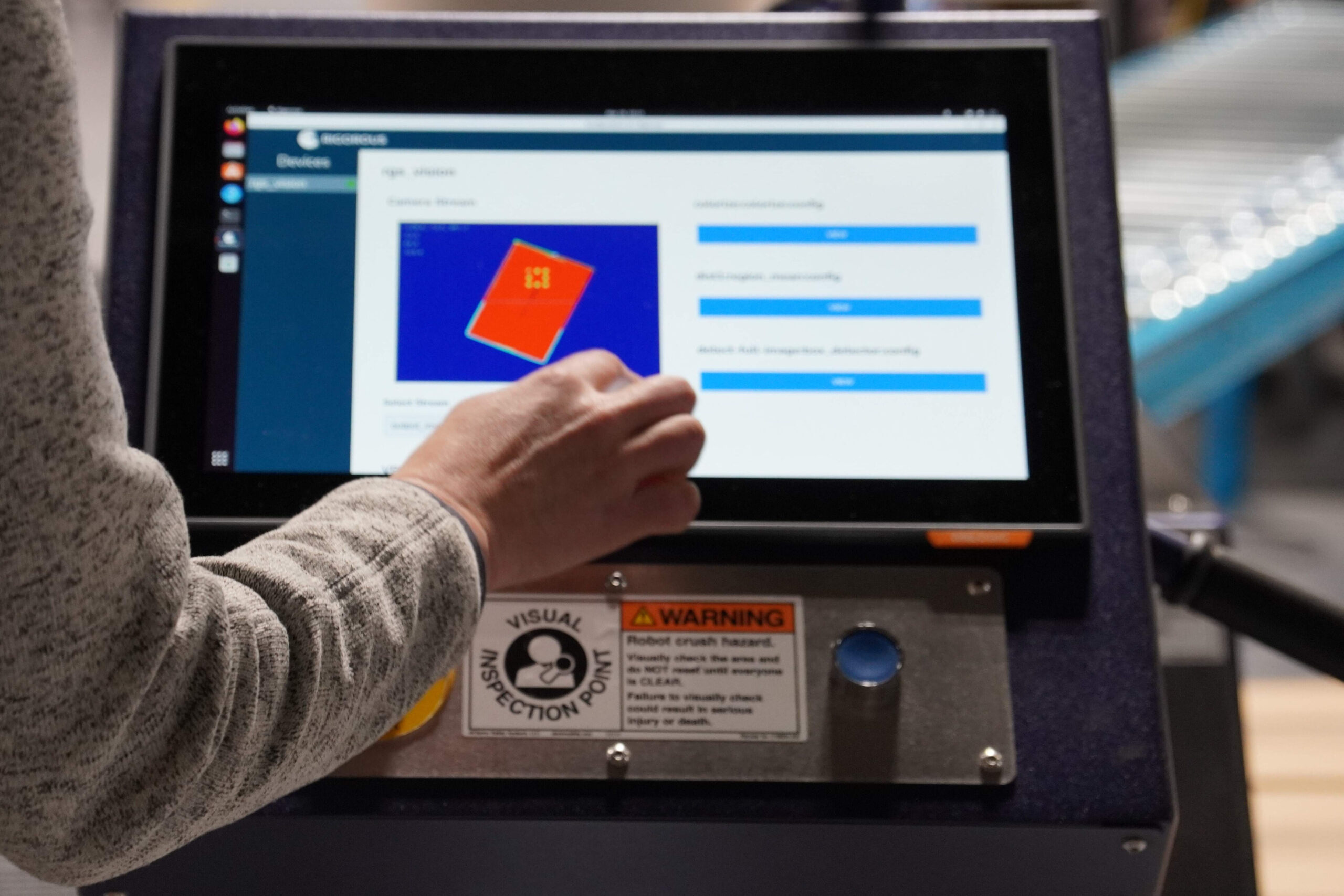
No-code platforms let manufacturers configure and adjust systems without needing robotics experts in-house. Paired with advances in machine vision, robots can now read their environment in real time and adapt to variation on the fly.
Physical Applications
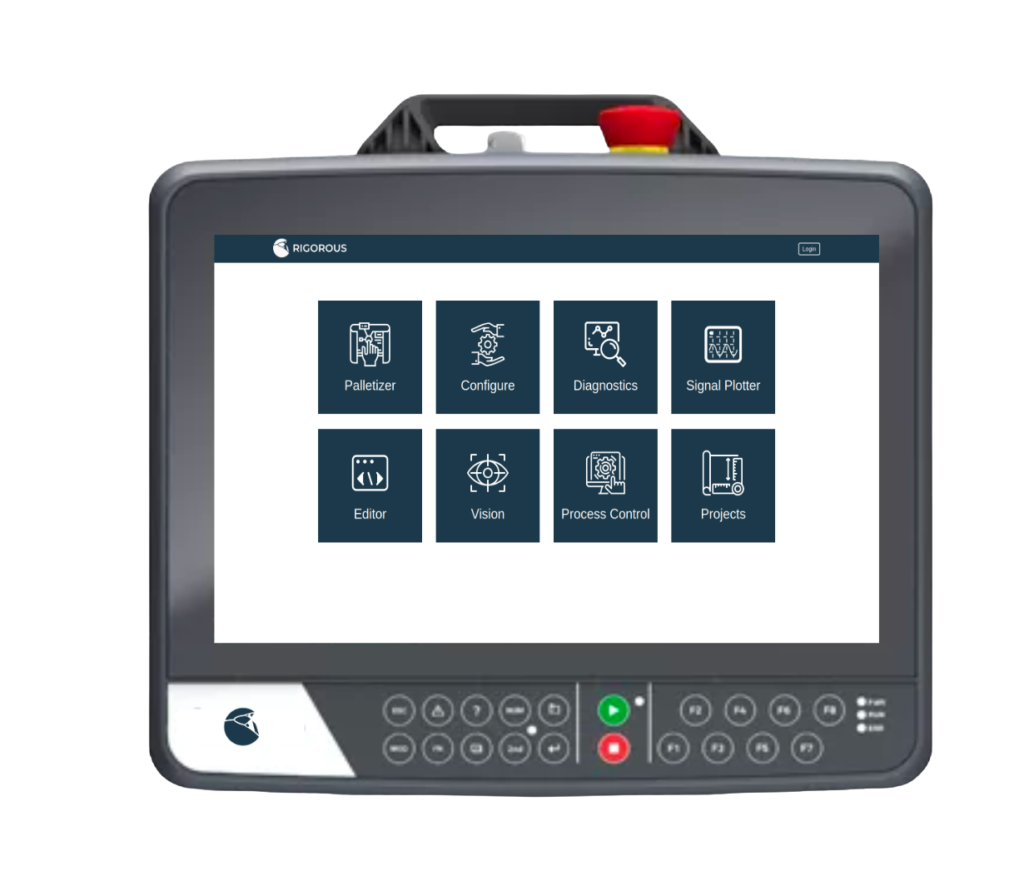
Instead of custom coding every system from scratch, Rigorous builds RGS Physical Applications. These are pre-built software applications for common robotic tasks like palletizing and dispensing.
Just as you open a specific app to perform a specific function on your smartphone, you load a pre-built Physical Application to make the robot perform its specific task.
Operators are not writing code or programming motion from scratch anymore.They choose the job, enter the dimensions, press start, and step back.
Vision Tools
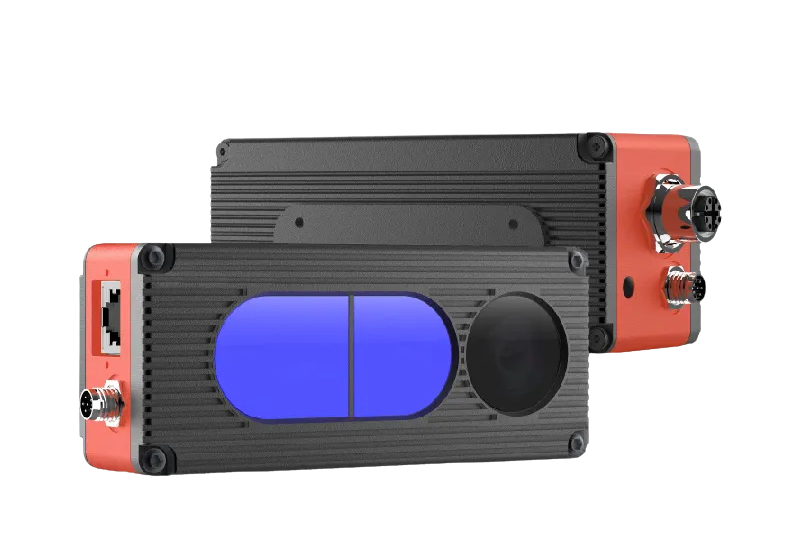
Every Rigorous system includes RGS Vision, a software layer that uses high-resolution RGB imaging plus time-of-flight depth sensing to build a live 3D model of the workspace. That means the robot responds to actual conditions on every cycle, not just what was programmed ahead of time.
Packaging plants show the reality of high mix manufacturing. After five years working with box plants, we’ve seen realities like boxes arriving crooked, SKUs rotating mid-shift, and folder gluers running at different speeds. RGS Vision lets the robot catch these variables before they turn into downtime.
With real‑time spatial awareness , vision allows the robot to pick and place accurately without mechanical alignment. If a product is wrong or a configuration is off, the system alerts the operator before the error reaches the pallet. No manual measuring, no stopping the line to recalibrate.
Built‑In Remote Support
When more advanced support is needed, Rigorous backs every system with remote technical support throughout the customer lifecycle
Our systems are connected to Rigorous’ remote support infrastructure, which customers often cite as one of the most valuable parts of working with the company.
When something stops running, our team can log-in and resolve the issue without waiting for an onsite visit. For plants running high-mix lines on tight schedules, that can mean getting back into production much faster.
“Their team’s competence, collaborative spirit, and willingness to tackle complex challenges made them feel like part of our engineering department from day one.” – Southern Champion Tray
Real-World Applications
The webinar showed how flexible robotics is being used today in real production environments by teams operating robots for the first time. Two examples of manufacturers using our applications in the field are New England WoodCraft and Curtis Packaging.
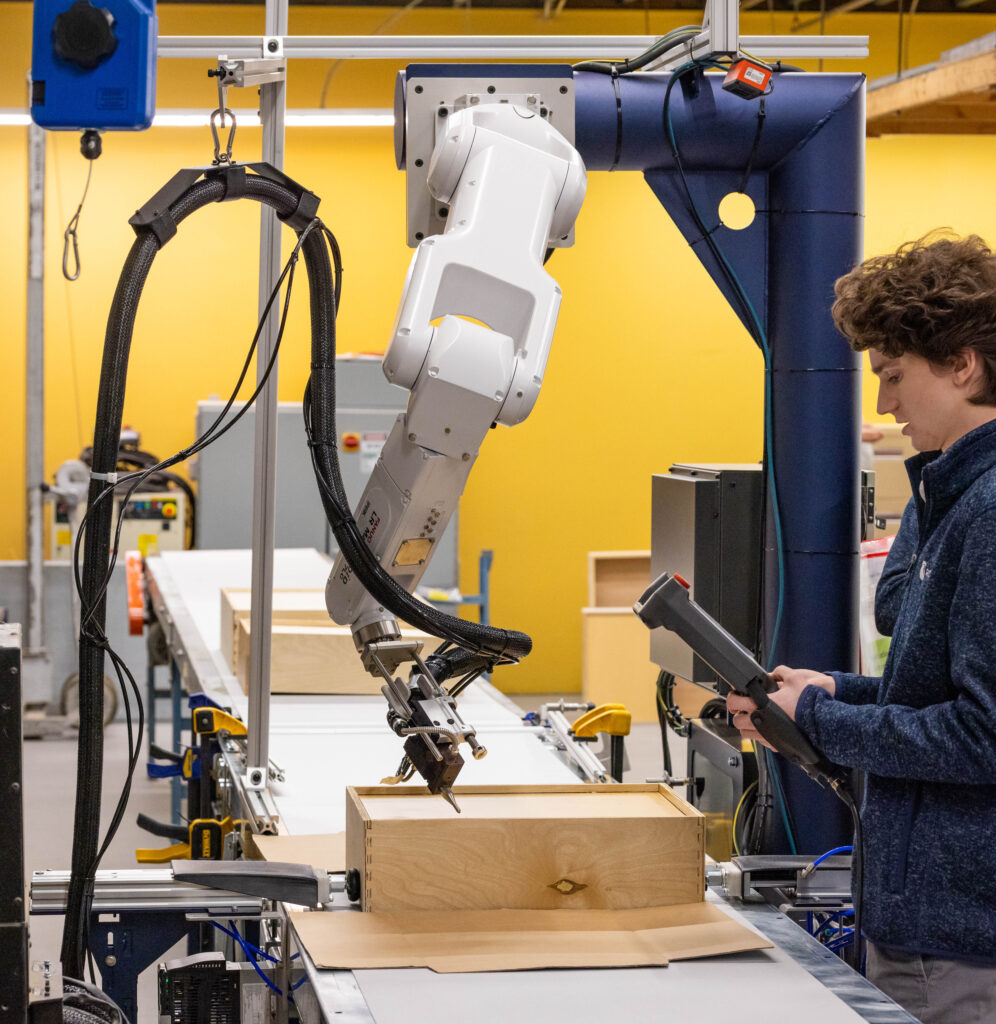
Smart Dispensing at New England WoodCraft
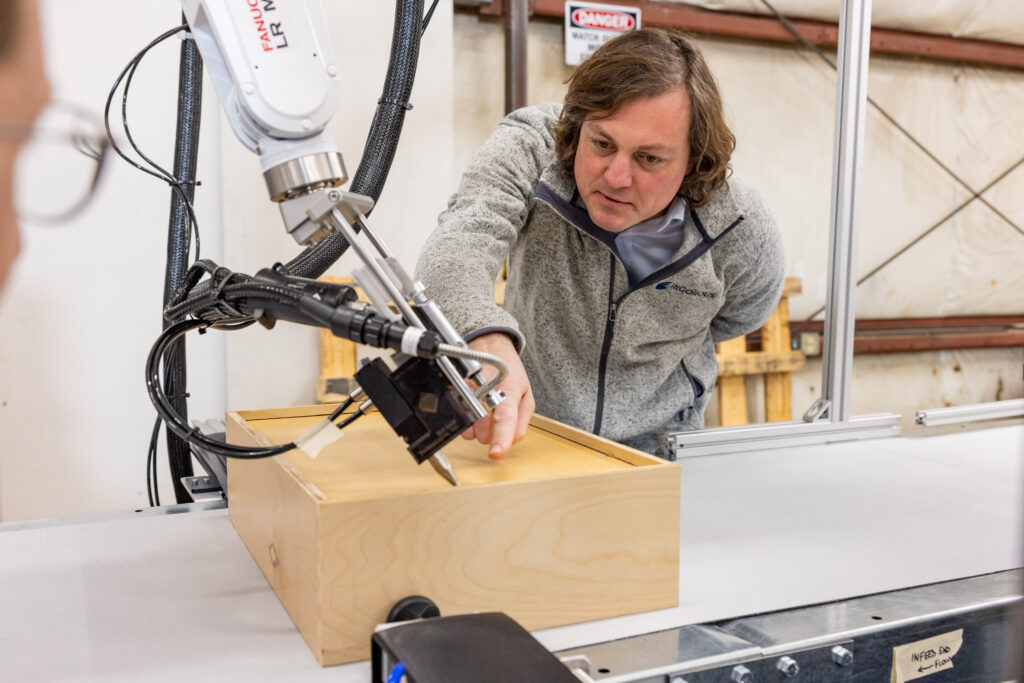
New England WoodCraft, a furniture manufacturer in Vermont, needed to automate its drawer-gluing process without limiting what it could run. With an unlimited range of drawer SKUs, a system that required reprogramming for every size simply wasn’t a viable option.
The solution was an autonomous drawer gluer built around RGS Vision, which scans each incoming drawer and handles varying dimensions and orientations within the same run.
The operator selects a gluing pattern, corners, full perimeter, or custom, and that’s it. From there the robot executes based on what it sees, with no per-part programming, no line changeovers, and no manual intervention. The system can run multiple parts simultaneously and handle hundreds of thousands of unique SKUs.
Watch the Smart Dispensing Demo
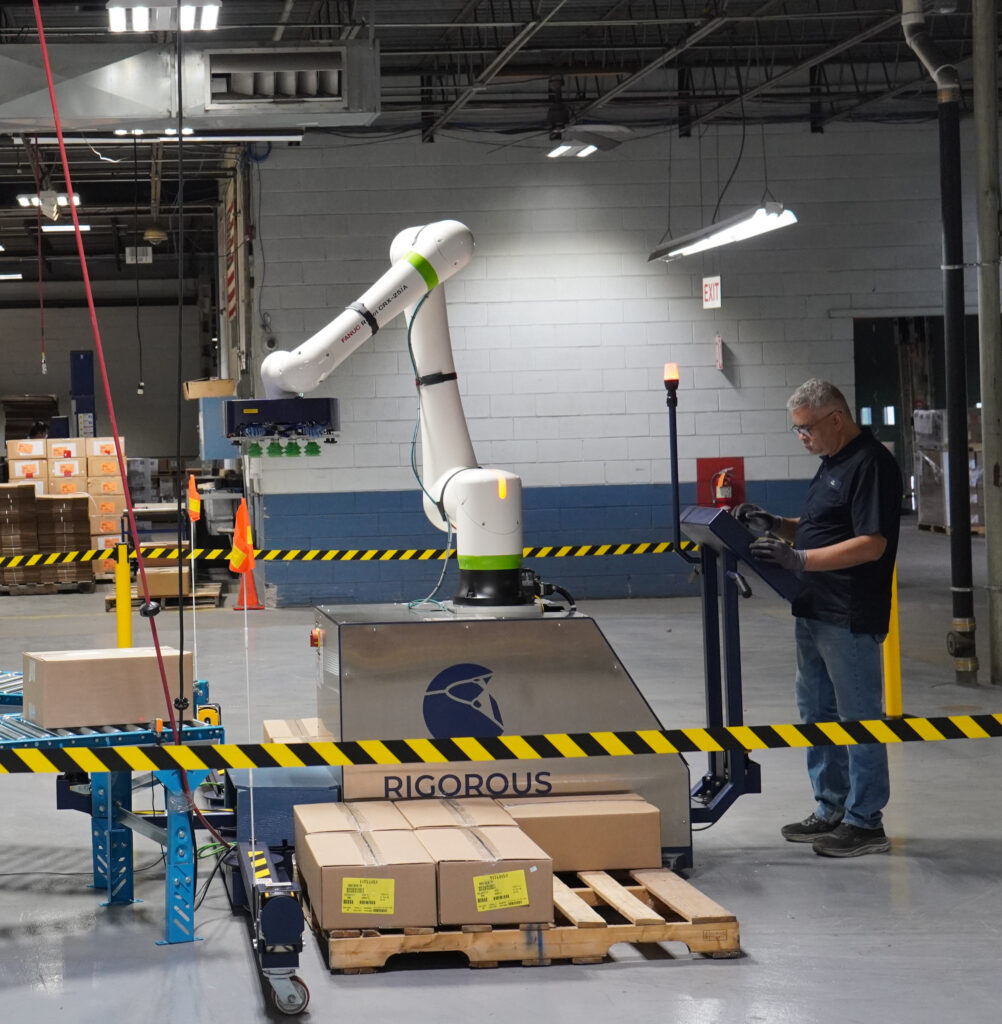
Mobile Palletizing at Curtis Packaging
Curtis Packaging, a luxury folding carton manufacturer, runs six folder gluers but never all of them at once. That’s the reality for a lot of plants. It’s hard to justify fixed automation on a line that isn’t running every day.
Instead of a fixed cell tied to one line, Rigorous built Curtis a vision-enabled palletizer that moves between lines based on where production is happening that day. One system, deployed where and when it’s needed.
The RIG Palletizer rolls up to any line on a its mobile base. The camera on the end of arm tool verifies box dimensions, confirms correct product at the pick point, and adjusts in real time if a box arrives crooked or the entered data is off. Errors get caught before they reach the pallet, without anyone having to stop the line to fix them.
Watch the Mobile Palletizing Demo
Conclusion
For a long time, automation only made sense for large facilities running the same product day after day. The barriers were too high for everyone else. The cost, the complexity, and the disruption to daily operations made it hard to justify.
That’s changed. The technology has moved forward, and it’s still moving. Vision systems are making robots smarter. No‑code software means the person running the line can make adjustments without waiting on a specialist. Systems that once took weeks to install and a team to manage can now roll up and run on day one.
Flexible robotics is becoming a practical way for manufacturers to grow without adding more complexity. What’s possible today wasn’t possible five years ago, and the pace of advancement isn’t slowing.
De-Risk Your Automation Investment
Learn what’s possible today with flexible robotics. Book a free automation consultation with the Rigorous team.